As I am sure you will be aware by now, the UK Ofsted Inspectorate have been working on a new framework for some time now, well possibly not enough time for their own staff to feel that it is well researched and steeped in evidence based practice, but certainly long enough for a couple of consultations and a trial run or two.
But, after a couple of false starts, are they inspecting a schools approach to belonging or not?
It certainly looked like they were back in November, when initial plans were leaked and we read articles such as the below from the financial times.
The 10 proposed new areas of assessment are curriculum, teaching, achievement, leadership, behaviour and values, attendance, preparation for next steps, opportunities to thrive, inclusion and belonging, and safeguarding.
The inclusion and belonging assessment would judge the extent to which schools include students from socio-economically disadvantaged backgrounds and those with special education needs.
And, when you look at the supporting evidence base for the new inspection framework, there too it is listed alongside Inclusion as a heading.
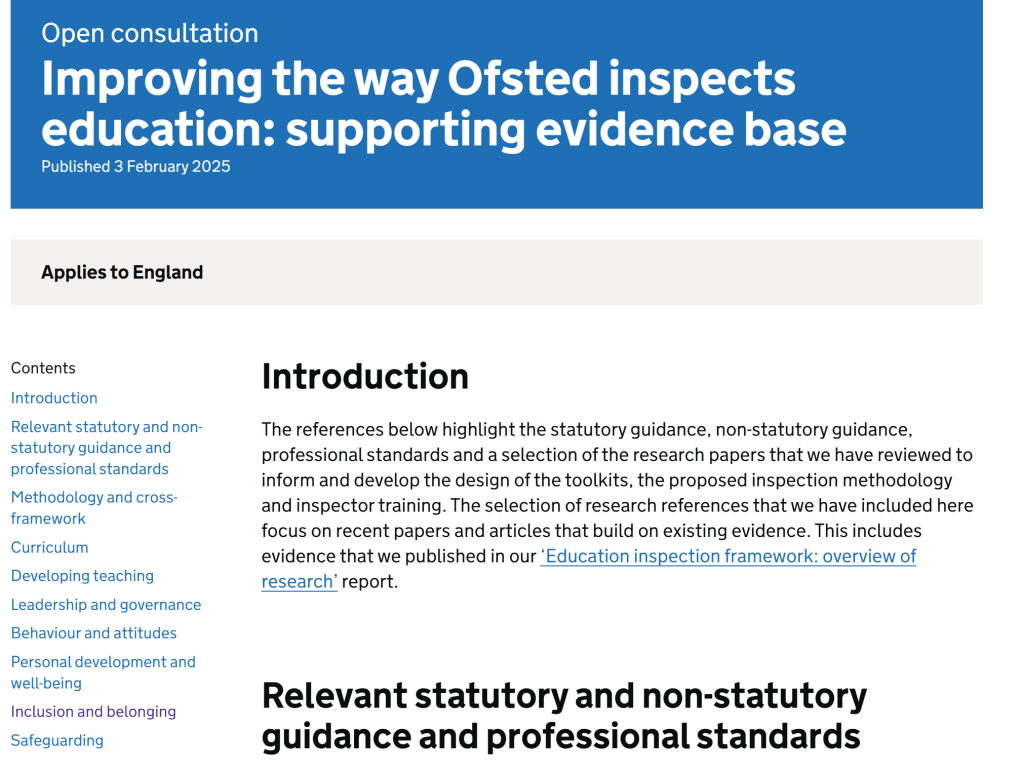
Explore this document further and you will see a whole host of links to research articles, books and papers on belonging. See full list below:
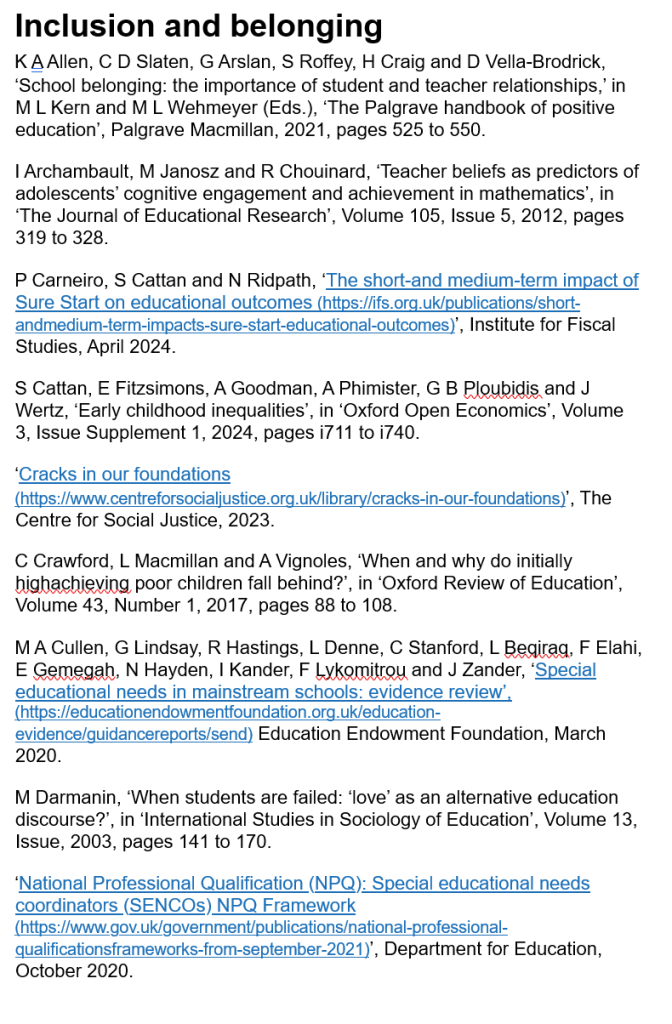
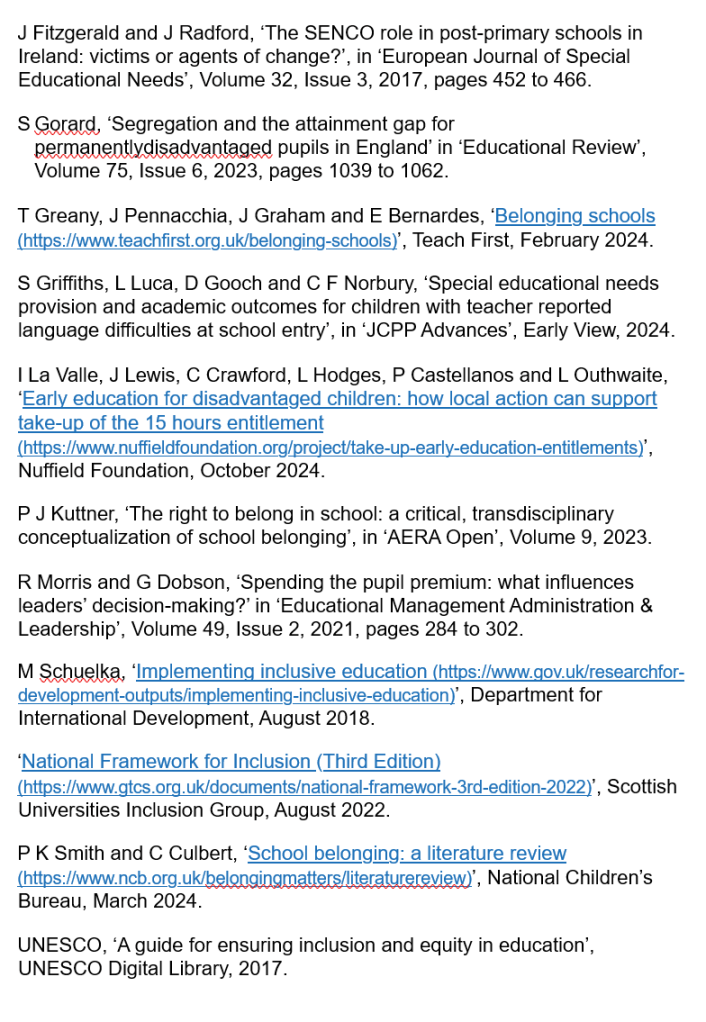
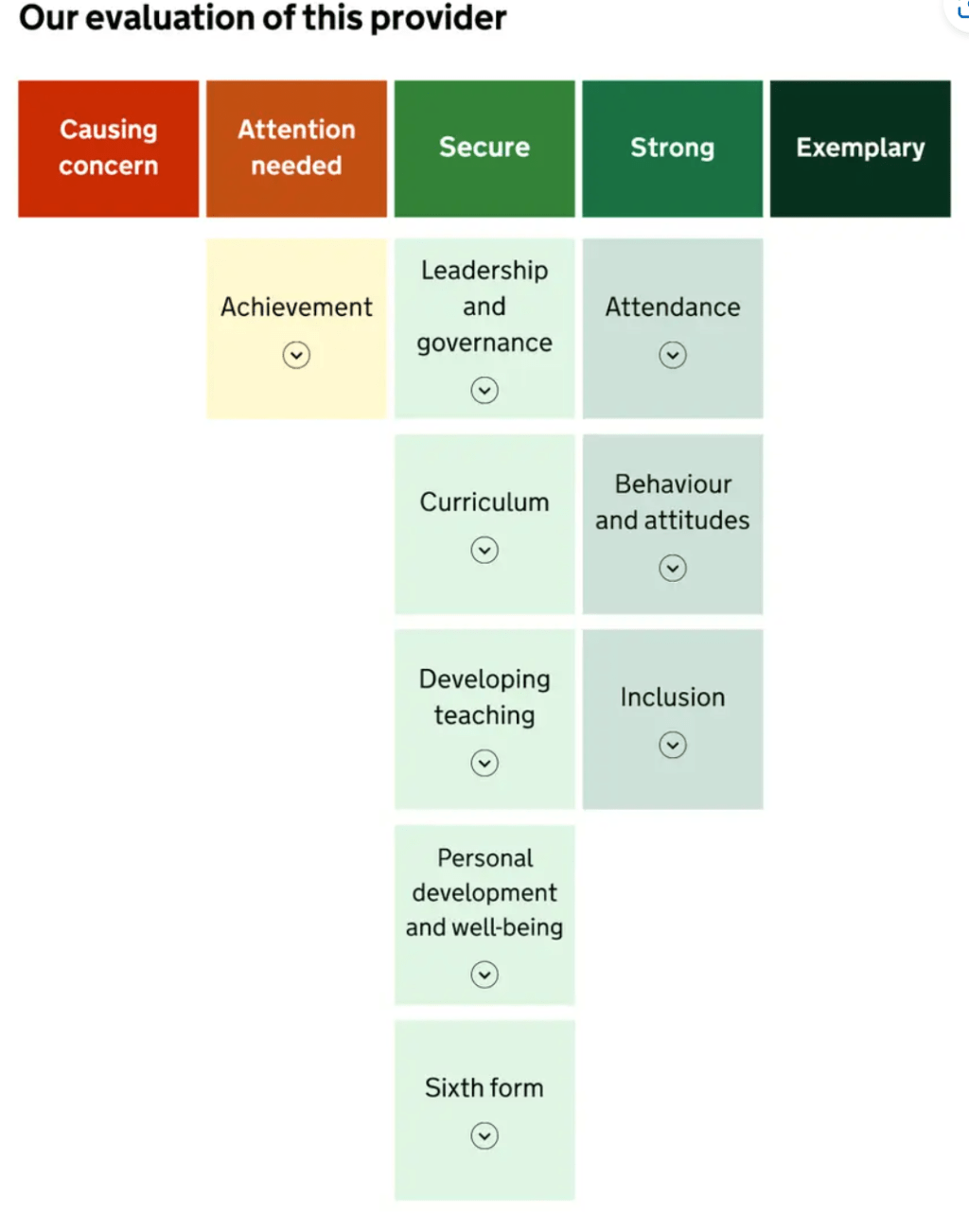
And yet, when we see the latest proposals for the inspection report card for schools in the UK, where has it gone?
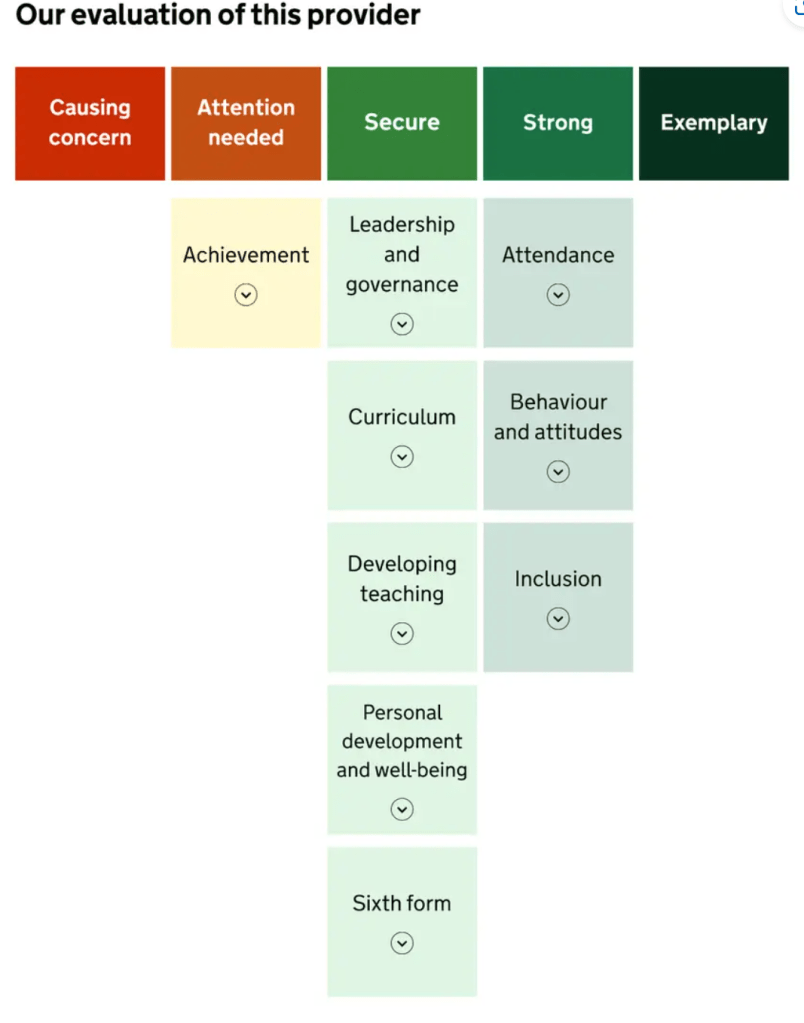
Still listed there is Inclusion, but no longer with its partner, Belonging. So what happened? Why did Ofsted rethink the inclusion of what we know to be such a vitally important area? and is it still in there somewhere?
The study of belonging shows that it is a vital ingredient in the success of our students. A whole range of studies, many listed above in the consideration of the new inspection framework, show the powerful impact a strong sense of belonging can have on attendance, inclusion and educational outcomes. Research also shows us that belonging is not a fixed feast, that is, it can be impacted by the practices of the setting, my ‘Best Bets‘ for increasing a sense of belonging can be found here.
If that is the case, surely Ofsted were right to consider it as a central theme in the new inspection framework?
As part of the consultation, Ofsted have released an inspection toolkit, reducing the framework down to a rubric of practice, graded on a 5 point scale from causing concern to exemplary. There is an assessment rubric for each of the proposed inspection themes, detailing the practice an inspector would expect to see in each domain. Rubrics such as this have existed in education for some time and, essentially, distil best practice into a tick list for schools to follow.
If we delve in to this toolkit and search for belonging, it appears twice. Firstly in the attendance rubric:

You’ll find it under ‘secure’ practice.
Lets just quickly take a look at this in the context of the full attendance rubric:

Secondly, you will find it under inclusion:
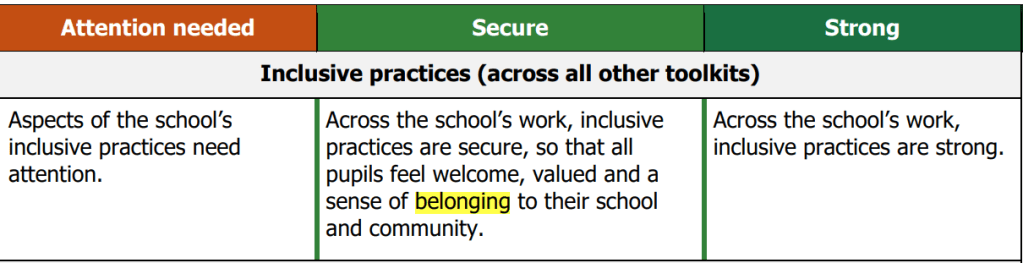
Again, in the context of the full Inclusion rubric:

Whilst it is great to see this important element included in the framework, it is hard to see, given the wealth of evidence and research on practice, how an inspector could consider it in any meaningful way as part of this large schema of effective practice. Bearing in mind these are just two rubrics from the 11 listed in the toolkit.

Also, given the wealth of evidence that they used to support the creation of the new framework, listed above, where is the impact of belonging on the other areas such as Leadership, Curriculum or Behaviour and Attitudes?
The truth is, belonging is hard to inspect. Hard, but not impossible. there are plenty of ways that we can effectively measure our students sense of belonging, I detail this more in my blog, ‘Taking the Pulse of Belonging‘ however, the skill and nuance needed, the relationship building, the trust and the listening skills, would all make it very difficult for an inspector on a one or two day visit to a school to make any meaningful judgement.
People avoid trying to measure belonging because many are scared of it. I have heard it called ‘nebulous’ or ‘obscure,’ but it isn’t. Your sense of belonging is right there at the heart of everything you do, every thought, every interaction and every decision. It is easier to identify in yourself than your skill in maths or literacy, and yet, we continue to avoid focusing on it because it is to do with emotion and human psyche. School leaders worry that a real focus on belonging might show up their practice to be weak or even damaging but, if we don’t focus on belonging in schools, the consequences will be far greater than a few bruised egos.
In many ways, I am glad that Ofsted have chosen to avoid headlines on belonging. Weak inspection pedagogy, coupled with the weak conceptual understanding of inspectors would lead to schools being labelled as ‘exemplary’ for belonging just because their attendance is above average, or there have been no serious safeguarding concerns or, more worryingly, because the 6 students that they asked if they ‘belonged in school,’ said yes.
So let’s not rely on Ofsted to tell us how good we are at belonging. Belonging cannot effectively be inspected externally, and certainly not as a very short paragraph in a 30 page rubric. If you want to think more deeply about the sense of belonging your students and staff feel in school every day, the impact it has on their lives and outcomes, read some of my earlier blogs, or any of the research listed by Ofsted above and reflect on your own practice. The answers are there in your own student body, if you take the time to look and reflect deeply.
And, in the meantime, should you wish to feedback to Ofsted on their current proposals, you can do so here: Improving the way Ofsted inspects education You have until the 28th of April.

 The Belonging Collective