Ever since I can remember, I have loved music. That’s not unusual, we all have a deep, primal connection with sound and rhythm. It’s in our DNA, our neural systems are wired for sound. The music we like however, and the music that we don’t is more inspired by our history and experiences than our brain.
So, what does this have to do with belonging?
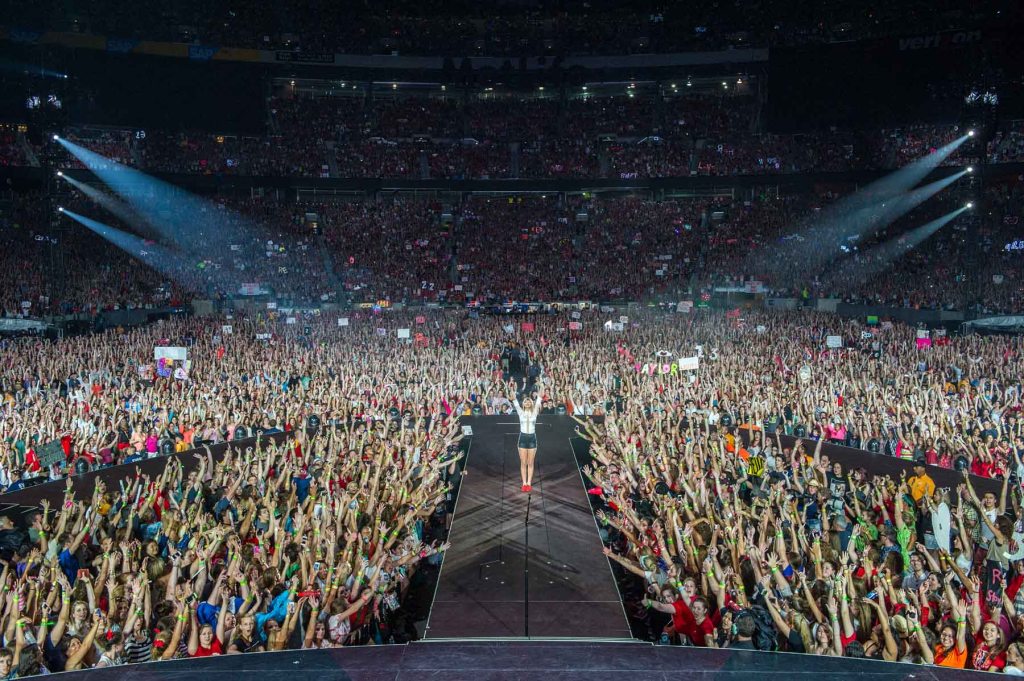
Firstly, music is a key part of culture. That is to say that most identifiable sub cultures have a soundtrack. Whether you were a rocker, a mod, a goth, an emo, a rude boy, a rasta, a hip hopper or a roadman, and I am aware of how much that list itself dates me, there are bands, artists and songs that form part of the tapestry of your image, your identity. The musicians you like and the songs you listen to connect you to others with similar tastes. It is part of who you are, the way you dress, the places you hang out and the things you watch. All of modern culture is a symptom of the human need for connection. Just look at the Taylor Swift phenomenon of 2024. Millions of Swifties across the globe travelling and spending mind blowing amounts of money just to be together and enjoy a moment in time. Many of those fans never even had tickets to get in, they just wanted to be in the same place as like minded others, to connect, share stories and exchange gifts. Thousands made bracelets just to give to others that they had never met before as a symbol of their unified passion, all in the name of connection.
Which music you connect with however is more to do with your everyday experiences than having any deeper neural significance. If you and your friends partied all night to Daft Punk, it is likely that those songs will come to hold significance to your own story, your own personal legend. If your late grandfather was a fan of Louis Armstrong, again, you are likely to enjoy the music that evokes a memory of him. Over our life, we build up a soundtrack from our various experiences, connections, people and places that become our songs of belonging. When we hear those songs, they will instantly transport us to a time, a person or a place, make us feel safe and part of something bigger… connected.
So music is an anchor to a safe space, a grounding mechanism, but it also gives us messages about people who may connect with us on a similar level. If I told you I was a big fan of Prince, or Paul Simon, that would tell you something we may or may not have in common, some shared experience which may be the first thread in the rope of connection, something we might choose to explore further.
Music affects the way we respond, react and feel emotion. According to Neuro scientist Daniel Levitin, listening to music is one of the very few activities that lights up our whole brain when viewed through a neural scanner. To put it into Daniel’s own words: ‘An exquisite orchestration of brain regions, involving both the oldest and newest parts of the brain, and regions as far apart as the Cerebellum in the back of the head and the frontal lobes just behind your eyes. It involves a precision choreography…between logical prediction systems and emotional reward systems… it reminds us of other music we have heard and it activities traces of emotional times in our lives. Your brain on music is all about … connections.” Music connects us to times, places and people. When you hear a song, it will instantly take you back to a moment, refresh memories and connect you to important times in your past.

To know that music helps to embed memory, you only have to think of how you learnt the alphabet, the chances are that you memorised it according to one of two tunes. “Twinkle Twinkle Little Star” or “Mary Had a Little Lamb.” Simple tunes and rhymes help us to remember what comes next because of their familiarity and predictability. By connecting new neural pathways to old, we strengthen learning.
Alongside this, David explains, Music causes the brain to react chemically by releasing dopamine, a neurotransmitter involved in the feelings of love, joy and motivation. In fact, he asserts, listening to someone sing the blues, or playing the blues yourself, causes the brain to react in the same way as when you feel the blues for real and similarly with joyous or celebrant songs.
Music predates language as a form of communication as a form of reinforcing social structure and embedding collective memory and it continues to do the same even in modern culture. We choose music to be present at key events in our life, weddings, birthdays, anniversaries. We put together compilations for parties or friends or journeys. When we break up with someone, we seek out break up songs, we want to hear people that share our emotional state. Listen to Roberta Flack’s ‘Killing me Softly’ for an example of a song about feeling ‘seen’ through music. When we win a match, we might hear “We are the Champions” played across the PA and when we attend a sports event, there are songs associated with our club. I am a Newcastle United fan and when I hear the opening notes of Mark Knopfler’s Local Hero, I know exactly what is coming, I feel the anticipation in my core. Likewise, you cannot fail to be moved when you hear the terraces of Anfield singing “You’ll Never Walk Alone“
Music stirs us and connects us like nothing else, it enables us to share a close bond with strangers and ignites a passion inside. I was fortunate enough for a long and very enjoyable period of my career, to be the headteacher of Padstow School in Cornwall, England. Every year, on the 1st of May, the whole town comes together (in two halves) to celebrate Mayday. Every year in school we would learn the song and play the tune and we would hold ‘Strike Ups‘ to get the children ready for this shared celebration. The music is instantly recognisable to anyone who knows it and again, it unites a select few, in a special, exclusive relationship that has lasted generations, and will last many more. The sense of belonging for Padstonians old and young on this day is the strongest you will feel anywhere in the world. This phenomenon is echoed in many cultures globally. A song and event specific to one place, one time and one culture.
This is also how the music used in advertising works, it connects you to a time, place, feeling, memory or event. If you remember the 1988 Nescafe ‘Sunrise’ advert that used the soundtrack ‘I can see clearly now.’ It was specifically designed to use music to hook you in to a feeling, a state of mind. To make you feel like that is a moment you can relate to, you would want to relive. It emanates a strong feeling of new beginnings, fresh starts and optimism. I remember spending months looking for a portable water boiler so that I could boil water in a mug, although I never did start drinking coffee..
Advertisers rely on this strong sense of connection through music to bind your loyalty to a product, and it works. Products become instantly recognisable, familiar and emotionally associated with key events or activities. The music might make you laugh or cry, but it will effect you emotionally and trigger a response. Music from films might do the same, Tunes like ‘The Imperial March‘ from star wars, the them from Superman or Raiders of The Lost Ark will all evoke an instant emotional response in your subconscious. I hear the theme from Jaws whenever I put my head under water for example.
Interiano et al carried out a very interesting study of 500 000 songs over the last 30 years. They noted several very interesting trends, but one of note was the general decline in the use of happy lyrics, or songs with a joyful theme, coupled with a rise in songs about sadness. They also saw a rise in introspective songs with the use of the words ‘I’, or ‘me’, coupled with a decline in songs about ‘we’ or ‘us,’ but, it is interesting to note that the most successful songs exhibited their own distinct dynamics. In particular, they tend to be ‘happier’, more ‘party-like’, less ‘relaxed’ and more ‘female’ than others. So, in a time in which we are more prone to introspection and pessimism, songs reflect this, but the songs we choose to listen to most are in fact, the converse of this, lifting our mood and celebrating together.
The currently most downloaded song of all time is the The Weeknd ‘Blinding Lights’ Which perhaps ties in with the findings of Iteriano et al above in that it is a party tune on a theme of love.
Also interesting is the the top 10 most popular songs of all time. At number One you will find Bing Crosby’s ‘White Christmas,’ with Elton John’s ‘Candle in the Wind’ at number two. One a song connected with a global celebration and the other a song connected with two huge events of sadness, the death of Marilyn Monroe and then later, Lady Diana Spencer, but both songs have significant emotional themes.
And so, music is unique in its power to influence our brain, our working memory and our chemical balance. It helps us to feel safe, familiar, comfortable and connected.
Most importantly however, is the power of singing to unite. Singing together is an activity bonds a group in something they share, something common to them or unique to their group. National Anthems would be a great example of this. Any mass gathering that can sing a common song of unity binds them strongly, it is stirring to see an anthem sung passionately.
Brene Brown in her book, ‘Braving the Wilderness’ talks about Holding hands with strangers. Showing up to events of shared sorrow or celebration and, what do we most commonly do at those events? We sing.

Singing en mass is an outpouring of emotion and a sharing of a common feeling that helps us to feel vindicated in our own emotional state good, or bad. Protest songs such as U2’s Sunday Bloody Sunday or Rage Against the Machine’s ‘Killing in the Name’ are further examples of songs that unite against a common cause, or in a common feeling, and there are many more, because music is the way in which we express the collective voice.
When I was a headteacher, we sang as a whole school every day. We held a collective assembly in which we celebrated our shared beliefs and success and we always, always sang. In my earlier blog ‘Best Bets‘ I referenced a particular assembly song that we sang regularly, a song that united us as whole. Singing in assembly not only unites you as described above, it also shows your vulnerability. We are often nervous of singing publicly, worried our voice isn’t good enough or that we might fluff a note, but that shared vulnerability builds trust, a public sign that we are not afraid of getting it wrong in front of each other, of messing up and carrying on. It is a public display of psychological safety. As described above by Levitin, this action also releases dopamine into the blood stream, lifting the collective mood.
So don’t underestimate the power of song in schools. One of my greatest sorrows is the general decline of singing in schools since Covid. It was almost used as an excuse to cease the gathering together of the whole school in celebration and song, and it has never restarted in many schools, but that is such an important time. If you want to bond your school in a positive way that is connected, unique and inclusive, sing as much and as often as you can. Even better if you have your own, unique, special song but, singing anything together will release natural chemicals that bond and lift the spirits of your children, and adults. It will forge friendships, connection and memories, so just sing. Sing songs with a rousing uplifting tune, with lyrics that strengthen connection and celebration, songs of we and us, sing your songs of belonging…together.

 The Belonging Collective