When “Thrive, Belong, Achieve” Meets the Reality of School Life.
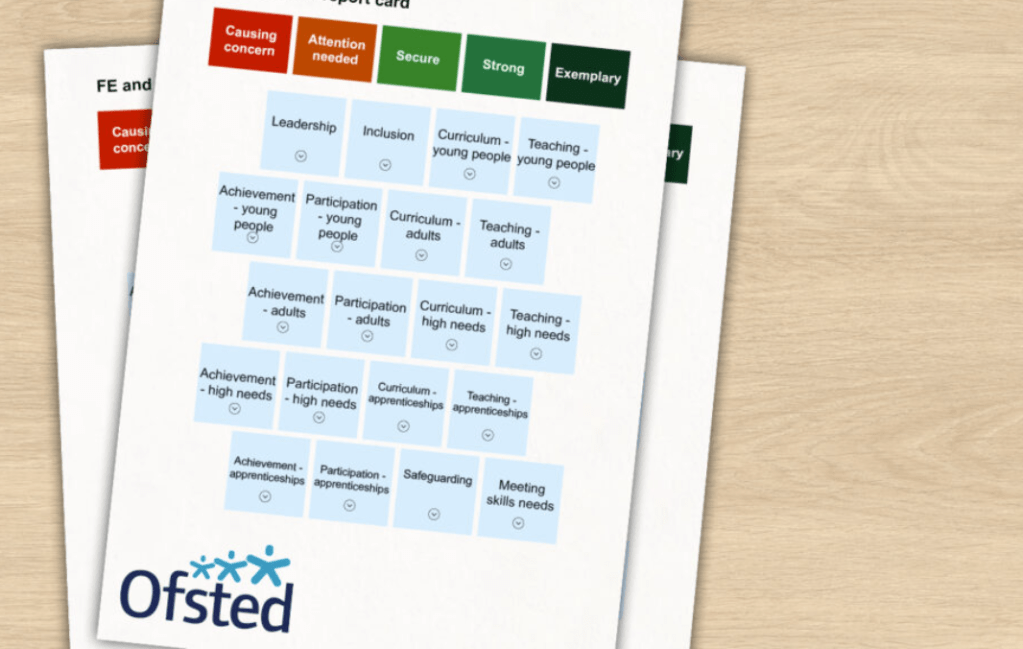
When I wrote the original Belonging and the New Ofsted Framework, the updated EIF was still emerging through consultations, early drafts, and the usual cautious optimism. Now it’s here — the Adapted (or Renewed) Framework, released with bold language, warm intentions, and a brand-new mantra: Thrive. Belong. Achieve.
Three words.
Three promises.
Three things our schools have been quietly working on for years, often with little external recognition.
Now that the framework is live, it’s worth asking: What does Ofsted think these words mean? What might inspectors be looking for? And crucially — does the new framework finally acknowledge the schools who refuse to give up on the children who challenge the system most?
Let’s take a closer look…..
Thrive, Belong, Achieve: The New Mantra
There’s something hopeful in seeing these three words in black and white. It feels as though Ofsted has listened — really listened — to the profession’s growing insistence that education must be about more than exam results.
ACHIEVE
Ofsted says achievement is now about academic and personal development. Schools will be judged not only on what pupils know but on who they are becoming. This is a subtle but important shift. It acknowledges that grades don’t tell the whole story of a child’s school experience.
BELONG
For the first time, belonging isn’t implied — it’s explicitly part of the inspection lens. Inspectors will consider whether pupils:
- feel valued
- feel safe
- feel part of the community
- contribute and are heard
This is huge. Belonging is no longer “the soft stuff”. It sits at the heart of what makes a school effective.
THRIVE
Thriving isn’t a metaphor: Ofsted frames it as the condition in which safety, wellbeing, inclusion, and curriculum all intersect. Children thrive when they are taught well, supported well, and cared for well — in equal measure.
On paper, it’s the most holistic vision Ofsted has ever set out.
But paper is one thing. Practice is another.
The Gap: Accountability for Schools Who Hold On Tight
Here’s where the warm glow of “Thrive, Belong, Achieve” cools a little.
There is still no explicit accountability mechanism for academies who fail to keep the most vulnerable children in the system.
The schools doing the most important inclusion work — the ones refusing off-rolling, refusing easy exits, refusing to let go of children who have been let down repeatedly — often do so at a cost:
- attendance figures suffer
- behaviour statistics rise
- progress scores flatten
- published data “looks” worse than the school’s lived reality
These schools are doing brave work.
System-protecting work.
The kind of work belonging demands.
Yet the renewed framework does not contain a clear way to recognise or reward it.
Inspectors may take context into account — and many will — but context is not the same as accountability. And without a structured way to measure inclusive resilience, we still risk penalising the schools who do the right thing for the hardest-to-reach pupils.
It’s a missed opportunity.
Where Belonging Shows Up in the Framework
Although the framework doesn’t always name “belonging”, it absolutely lives in several sections. Here’s how leaders and inspectors may interpret them:
1. Inclusion (now a graded area)
This is perhaps the closest the framework gets to assessing belonging directly. It asks:
- Are barriers identified?
- Are they removed?
- Do pupils participate fully?
- Does the school culture feel inclusive?
This is about systems and stories. Data and dignity.
2. Behaviour and Attendance (merged)
This is no longer a numbers-game. Inspectors are encouraged to explore:
- the culture underpinning behaviour
- the relationships driving attendance
- how belonging influences engagement
- whether approaches are relational, not purely punitive
Schools with strong nurture environments may finally see these practices recognised.
3. Personal Development & Wellbeing
This is where belonging often breathes most naturally. Inspectors will look at:
- emotional safety
- mental health support
- respect and representation
- opportunities to lead, contribute, and be heard
- the school’s ethos and values in practice
In other words: is this a place where children feel they matter?
4. Leadership & Governance
Leaders and governors must show they:
- prioritise inclusion
- use ABT (Achieve, Belong, Thrive) in strategy
- allocate resources to support belonging
- evaluate belonging meaningfully
This is the moment when your ethos becomes evidence.
5. Safeguarding
Though a simple “met / not met”, safeguarding weaves through every aspect of belonging. A safe child is a child who can belong.
Key Sections of the Framework That Address Belonging — And How Leaders Might Interpret Them
Let’s walk through the evaluation areas most relevant to belonging, and consider how inspectors and school leaders might engage with them.
| Evaluation Area | Belonging Lens: What Inspectors Might Focus On | Implications for School Leaders |
| Inclusion | This is now a standalone graded area. Inspectors will assess how well the school identifies and removes barriers, how leaders plan and review strategies, and how pupils experience inclusion. Global Equality Collective creating-excellence.co.uk | Leaders must build strong evidence of both systems (e.g., identification processes, data) and lived experience (pupil voice, case studies). Use intersectional data: show how different groups belong. |
| Behaviour & Attendance | Inspectors will explore how the school’s culture, relationships, routines, and inclusion strategies contribute to positive behaviour and engagement, not just sanctions or attendance data. thriveapproach.com | Embed behaviour policy within relational and belonging practices (e.g., restorative approaches, nurture). Use qualitative evidence (pupil stories) alongside quantitative metrics. |
| Personal Development & Wellbeing | Wellbeing is central. Inspectors will assess how the school’s ethos supports emotional safety, mental health, staff wellbeing, and belonging. thriveapproach.com | Provide clear narrative and documentation of wellbeing strategies (e.g., Thrive, pastoral systems, staff wellbeing initiatives). Link these to belonging: show how they foster connectedness. |
| Leadership & Governance | Inspectors will scrutinise how leaders and governors promote belonging: how they set values, allocate resources, and evaluate impact. National Education Union | Governors need to be able to articulate how belonging features in the school’s mission. Leaders should ensure their self-evaluation, strategic plans, and communications clearly reflect ABT (Achieve, Belong, Thrive). |
| Safeguarding | Though judged on a met / not met basis, safeguarding underpins belonging — thriving cannot happen without safety. Inspectors will look at culture of care, training, governance, recruitment, and vigilance. GOV.UK | Showcase robust safeguarding practices, but also how they create a sense of trust, protection, and belonging. Demonstrate that safeguarding is part of a relational, not just procedural, approach. |
A Word on Inspection Culture
From early pilot reports, many schools described inspectors as more human, more curious, more open to context. Less clipboard, more conversation. If this becomes the norm, belonging may finally have the voice it deserves during inspection — not as an add-on, but as a lens through which everything is viewed.
But consistency will be key. Belonging cannot depend on who walks through the door on inspection day.
Practical Tips for School Leaders: Making Belonging Visible Under the New Framework
Here are some grounded, practical steps to ensure your belonging work is recognised and understood:
1. Build your SEF around Achieve–Belong–Thrive
Don’t just reference the mantra — use it as your structure.
Inspectors love clarity. ABT provides it.
2. Make belonging measurable
Use:
- pupil voice (powerful evidence)
- case studies
- behaviour and attendance journeys
- wellbeing surveys
- staff voice
- parent voice
Turn belonging into a narrative supported by data.
3. Document your inclusive courage
If you keep children others would have moved on — say so.
Explain why, how, and what impact it’s had.
This is moral purpose in action.
4. Show the thread from values → practice → impact
For every belonging initiative, be able to answer:
- Why did we do it?
- What does it look like daily?
- How do we know it works?
5. Train staff on the language of the new framework
Help them articulate belonging in the context of:
- curriculum
- relationships
- pastoral support
- behaviour culture
- equity and inclusion
Inspectors will speak about Achieve, Belong, Thrive. Staff should feel comfortable speaking it too.
6. Prepare pupils, too
Not through rehearsed answers — but through daily reality.
If pupils genuinely feel they belong, that will shine through in every conversation.
7. Ensure governors can talk belonging confidently
They need to be ready to explain:
- how the school monitors inclusion
- how they challenge leaders
- how they resource belonging
- how ABT drives strategic decisions
This is often the area where inspections are won or lost.
Final Thoughts
The refreshed Ofsted framework is not perfect. It still leaves meaningful gaps, especially around acknowledging the deep, difficult, compassionate work that some schools do to hold vulnerable children in the system. But the new language — Thrive. Belong. Achieve. — is not cosmetic. It signals a shift in what matters.
And, just maybe, belonging is finding its rightful place at the centre of school life — not an extra, not an afterthought, but a measure of excellence in its own right.
The work now is to make this visible.
To name it.
To evidence it.
To protect it.
Because long after inspection day is over, belonging is what your children will remember.

 The Belonging Collective