
Human Flourishing in an AI world.
This week I had the privilege of attending the Fully Human, Fully Alive conference hosted by the National Society of Education. It was a day dedicated to exploring the relationship between artificial intelligence and the future of education — and, perhaps more importantly, the future of humanity. It is increasingly clear that AI represents one…


Collateral Damage
We have grown accustomed to the language of sacrifice. It rolls off press conferences and planning documents with alarming ease. Necessary losses. Acceptable risk. Unintended consequences. We package harm in sterile phrases and move on, convinced that the end—whatever shimmering achievement we have in mind—will justify the means. But surely one casualty is one too…

Carrying One Another Across
The story of St Christopher. There’s something quietly compelling about the story of Saint Christopher. Not simply the dramatic image—of a broad-shouldered man wading through a swollen river with a child on his back—but the deeper invitation embedded within it: that faith is lived most fully when we carry one another through what feels impassable.…

The Kitchen Table
Episode 1 Very excited to launch our new Podcast, “The Kitchen Table” Pull up a chair – this is where research meets relationships, and we’re diving deep into what it means to belong, matter, and fight for social justice in education. In this first episode of The Kitchen Table, Mohamed, Danielle, and I share our stories: from…

What if you did something for no purpose?
What if you did something today not to achieve, improve, or produce — but simply because being present felt enough? This is at the heart of a Zen‑inspired practice that invites us to engage in actions without agenda or outcome, and the research suggests it could be more nourishing for our minds than we realise.…
Why “The Village” Matters More Than Ever.
Education as a Collective Endeavour. “If you want to go fast, go alone; if you want to go far, go together.”This African proverb is a navigation star for the work we do — reminding us that learning, belonging and flourishing happen in relationship, not isolation. And when we say “it takes a village to raise…
Throughout Life, We Belong Somewhere.
A Guest Blog from Bob Fox Bob is a friend and an elder in my village. Bob worked in education for many years, finishing his career as a secondary headteacher. He is active in village life, running clubs for drama, woodwork and art, as well as being an active supporter of the local school. Bob…

Silent Exits.
Exclusion, Elective Home Education, Drift and Moral Duty. Every number tells a story, but some numbers should stop us in our tracks. Across the UK, tens of thousands of children are now excluded from school each year. Alongside this, we are seeing a sharp and sustained rise in the number of families choosing elective home…

The Day George Surprised Me: How Connection Can Transform Learning.
A guest Blog by Dr. Lorena Franco Very excited to bring you a new guest Blog from educator Dr Lorena Franco, Arkansas. Lorena focuses on how individual empathy and connection can transform the learning experience of an individual, in this case, George. The bell rang, yet George stayed in his seat, pencil in hand, determined…

The Time We Give to People Is the Time We Give to Human Flourishing
In a world that races on schedules, deadlines and the constant pull of screens, it’s easy to squeeze people into the margins of our weeks rather than the heart of them. Yet, research from psychology and human development tells us something profound: the quality of our relationships isn’t a luxury — it’s essential to who…
Birthdays, Anniversaries….Significance and Love.
There’s something deeply human about remembering. Not just facts or tasks, but the dates that mark someone’s life. Birthdays, wedding anniversaries, the day someone got a new job, graduated, or became a parent, the day someone lost a loved one. Remembering these dates is more than calendar-management — it is an outward sign, a gentle…

My Top Ten Facts on Belonging
An academically researched belonging fact check. In my previous posts — “My Best Bets for Belonging” and “Belonging is the Answer, What’s Your Question” — I explored what belonging means in educational and community contexts, and why it matters. In this blog I want to sharpen that exploration: these are ten research-based facts about belonging…
Belonging and the New Ofsted Framework (Part Two)
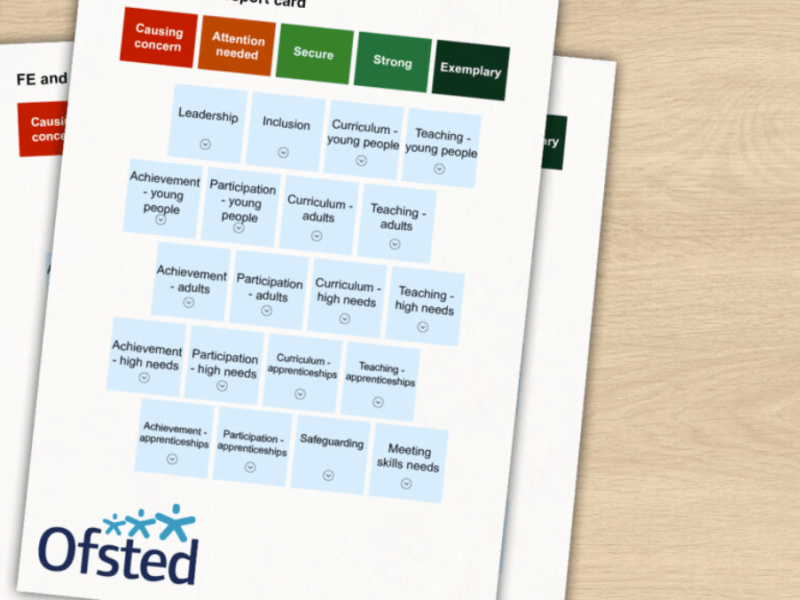
When “Thrive, Belong, Achieve” Meets the Reality of School Life. When I wrote the original Belonging and the New Ofsted Framework, the updated EIF was still emerging through consultations, early drafts, and the usual cautious optimism. Now it’s here — the Adapted (or Renewed) Framework, released with bold language, warm intentions, and a brand-new mantra:…

Sonder
In my previous blog, The Business of Belonging, I explored Rhodes Perry’s work—particularly as highlighted in his Forbes interview—where he describes the practice of building cultures of belonging with intentionality, humility, and courage. In that piece, Perry briefly references a word that has stayed with me since: Sonder. A word that quietly names something many…

A Man Called Ove.
Recently, I have been reading the work of Susan Pinker and reflecting on her clear, humane insistence that the small, face-to-face interactions that make up our daily lives are not trivial niceties but biological necessities. Pinker asks us to notice how conversation, proximity and routine social contact shape cognition, health and resilience; she calls this…

Belonging, Glass Ceilings, and the Quiet Architecture of Potential
We talk about belonging as though it’s always a good thing—warm, grounding, a place to rest your feet and your ideas. In schools, in workplaces, in our friendships, belonging is often presented as the ultimate form of safety. But here’s the uncomfortable truth: belonging can just as easily become a gatekeeper as a gift. It…

The Rituals That Root Us.
There are days when the world moves too fast.When our minds spin, our feet hover above the ground, and the question returns — Where do I belong? Sometimes, the answer doesn’t come in words.It comes in the lighting of a candle.The pouring of tea.The kneeling down.The touching of earth.The passing of bread.A breath, taken in…

Improving Attendance – more than just a statistic.
A Guest Blog from Olly Jefferies – Headteacher. USJ is a small primary school in the heart of a coastal town. Half of our families are in receipt of the Pupil Premium grant, 54% of pupils are on the SEND register, and 6% have an Education, Health and Care Plan (EHCP). Each of these figures…
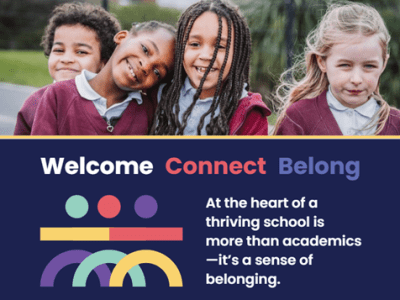
Belonging in Primary Schools: Helping every child feel at home through our new school audit tool Welcome, Connect, Belong
A Guest Blog by Kelly Earnshaw Why belonging matters In primary schools, belonging is the bedrock of learning. These are the years when children take their first steps into education, form their earliest friendships and begin to see themselves as learners. If a child feels they don’t fit in—whether that’s being left out on the…
When students feel like they belong, they are ready to learn and grow
A Guest Blog by Lisa Hanifan On a non-uniform day, Ilyan did not wear his street clothes like his peers; instead he proudly entered the classroom wearing his thobe. He didn’t just arrive that day; he showed up. And as he confidently made his way to his desk, he sat a bit taller and held…

Children don’t behave for teachers they like, they behave for teachers they trust, and who trust them.
I have read a number of blogs recently, some by significant educational heavyweights, that equate relational behaviour management to ‘children only behaving for teachers that they like.’ This, overly simplistic and inaccurate view of relational behaviour management exemplifies a total misunderstanding of the deep and hard work that goes into relational behaviour management. In this…

The Dog Who Learned Through Love.
A short fable about relational education. A puppy, beaten and neglected, was brought at last to a rescue home. Its body healed, but its heart still trembled at every sound. One day, a man came to adopt it. At first, he spoke kindly, but when the dog chewed his shoes through fear and confusion, the…

Navigating the Seven C’s of Belonging
A framework for securing belonging in your school or classroom. A rising tide does not lift all boats. Some boats are full of holes, some have rotten timbers and others are rudderless, adrift in stormy seas. In order for the tide to be able to lift each boat and keep it afloat, the sailor must…
Belonging- The Results Are In!
What does Belonging feel like for students and teachers? Over the last term, I have been working with a group of colleagues across a city to talk about Belonging and how we might harness it as a superpower to generate enhanced outcomes both educationally and in terms of wellbeing for our young people. We know…

Belonging is the Answer – What’s Your Question?
Having interviewed many candidates, for many posts, over many years, when asked for advice on interview technique I have always said, if you are stumped for an answer, the answer is always relationships. How do you raise standards in a school? – Relationships. How do you improve student behaviour? – Relationships. How do you improve…
The Business of Belonging
WHAT DID PETER DRUCKER NEVER ACTUALLY SAY? ‘Culture eats strategy for breakfast.’ Peter Drucker (possibly, but probably not, more likely Steve Jobs or Jack Welch That is to say, belonging matters just as much in business as it does in education. Human beings need to belong, they need to find significance and they need to…
The Song of Belonging.
Ever since I can remember, I have loved music. That’s not unusual, we all have a deep, primal connection with sound and rhythm. It’s in our DNA, our neural systems are wired for sound. The music we like however, and the music that we don’t is more inspired by our history and experiences than our…
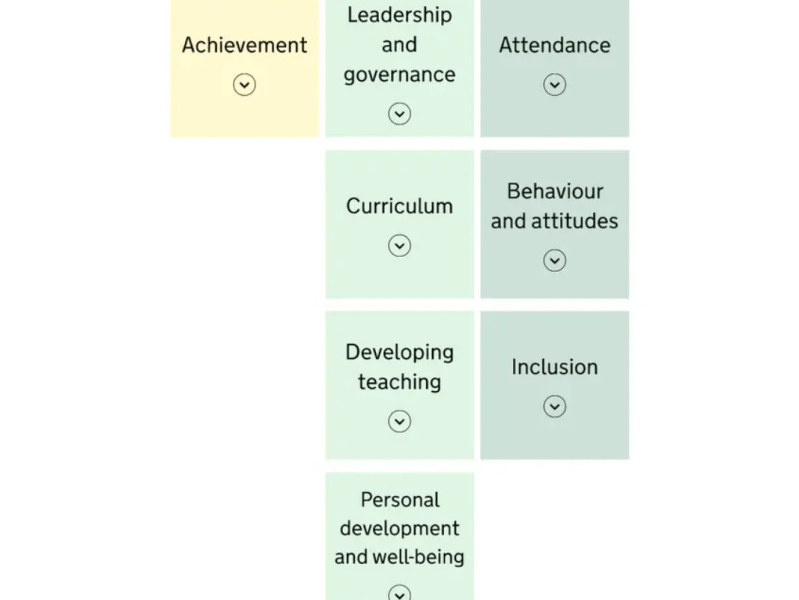
Belonging and the new Ofsted Framework.
As I am sure you will be aware by now, the UK Ofsted Inspectorate have been working on a new framework for some time now, well possibly not enough time for their own staff to feel that it is well researched and steeped in evidence based practice, but certainly long enough for a couple of…
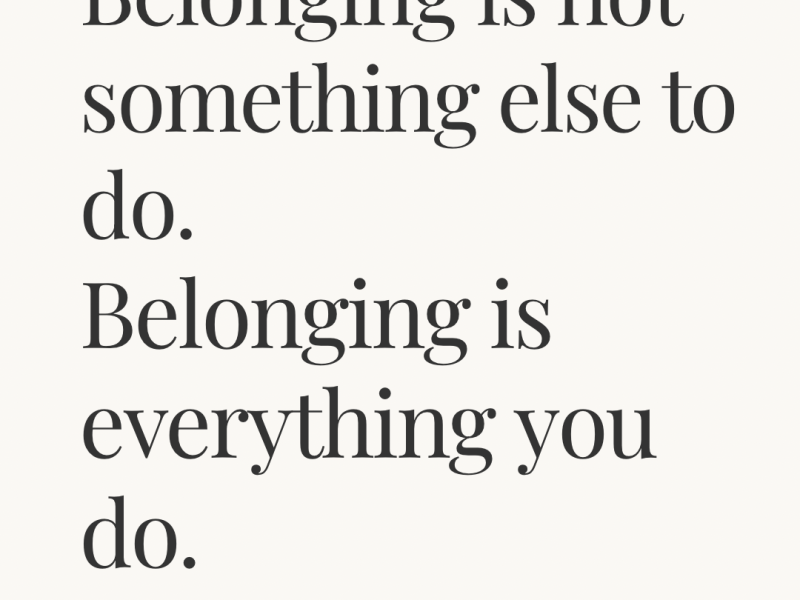
The Language of Belonging
In my last blog, I talked about using a language of Love over Respect and Tolerance. Since then, I have been reflecting on the language of belonging in a more general sense. In schools, and life, every interaction we have, and the language we use to frame that interaction, has an impact on our feeling…

Why I’m no longer talking about Respect (or Tolerance.)
The value of Respect is one that you will find across cultures, across institutions and across countries. The United Nations identified it as one of the top 10 values shared across cultures and Gocke (2021) identified it as fifth in the core values necessary in education, as identified by future educators. But why? What does…

Belonging as the Key Agent in Social Justice.
Last week, The Times ran a particularly interesting article on student belonging at Edinburgh University. The article, linked here, reports that the university has written to all of their students asking them not to ridicule their peers that may have come to University from poorer backgrounds. Their more privileged students, who are in the majority,…

The Dark Side of Belonging
Helping students to find their sense of belonging is not all about test scores and performance outcomes. It is proven to impact these, as outlined in my previous blog The Belonging Bonus, but this should not be the reason for our focus. If belonging is something that we all seek, (Maslow 1943) and we don’t…

Belonging and Cognitive Load Theory.
When I first started this blog page, I had a great response from the brilliant Aimee Tinkler asking how I thought belonging might affect the learners brain in the classroom and whether developing a strong sense of belonging in our students might release additional mental capacity for learning? This is a great question, and one…
My Best Bets for Belonging .
As the new term begins, it is vital that we get off on the right foot, making sure that from day one, all of our students, old and new, feel a connection with us that will activate their sense of belonging. By doing this, we can make sure that our schools are a positive environment…

Taking the pulse of belonging.
Measurement is the first step that leads to control and eventually to improvement. If you can’t measure something, you can’t understand it. If you can’t understand it, you can’t control it. If you can’t control it, you can’t improve it. H. James Harrington. Having established in my blog, The Belonging Bonus that increased sense of…
Why seems a great place to start.
Simon Sinek said ‘Start with the Why.’ so here we go. Why Belonging, why The Belonging Collective, Why a blog? All very good and valid questions. It seems that Belonging is on every presentation I attend currently, whether it is on behaviour, attendance, educational engagement or special educational needs. In one of her final speeches…
 The Belonging Collective