Category: Uncategorized
-

Birthdays, Anniversaries….Significance and Love.
There’s something deeply human about remembering. Not just facts or tasks, but the dates that mark someone’s life. Birthdays, wedding anniversaries, the day someone got a new job, graduated, or became a parent, the day someone lost a loved one. Remembering these dates is more than calendar-management — it is an outward sign, a gentle…
-
My Top Ten Facts on Belonging
An academically researched belonging fact check. In my previous posts — “My Best Bets for Belonging” and “Belonging is the Answer, What’s Your Question” — I explored what belonging means in educational and community contexts, and why it matters. In this blog I want to sharpen that exploration: these are ten research-based facts about belonging…
-
Belonging and the New Ofsted Framework (Part Two)
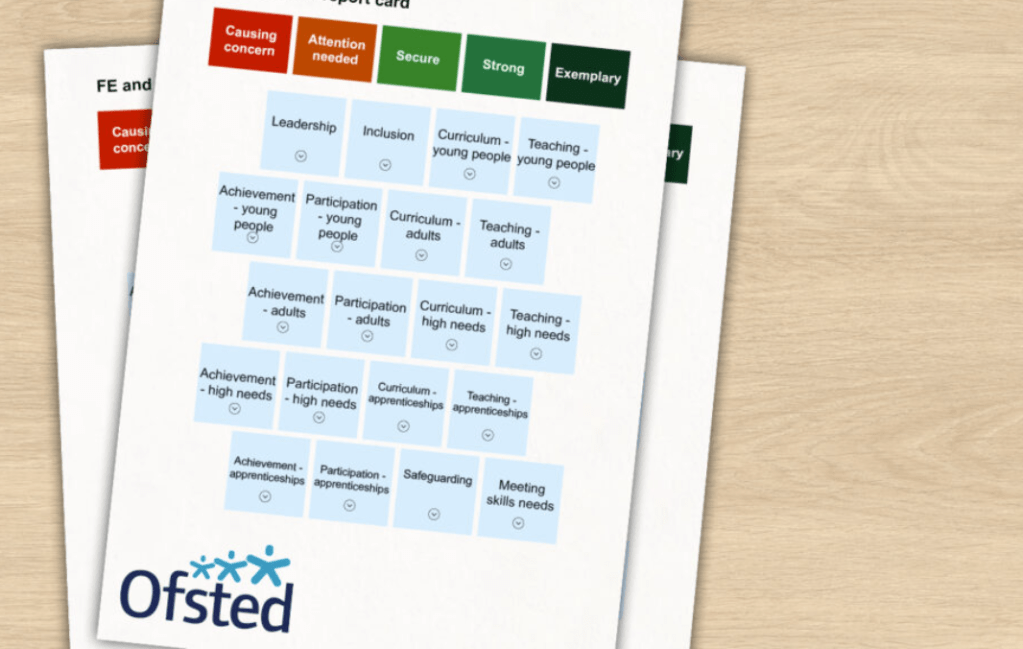
When “Thrive, Belong, Achieve” Meets the Reality of School Life. When I wrote the original Belonging and the New Ofsted Framework, the updated EIF was still emerging through consultations, early drafts, and the usual cautious optimism. Now it’s here — the Adapted (or Renewed) Framework, released with bold language, warm intentions, and a brand-new mantra:…
-

Sonder
In my previous blog, The Business of Belonging, I explored Rhodes Perry’s work—particularly as highlighted in his Forbes interview—where he describes the practice of building cultures of belonging with intentionality, humility, and courage. In that piece, Perry briefly references a word that has stayed with me since: Sonder. A word that quietly names something many…
-

A Man Called Ove.
Recently, I have been reading the work of Susan Pinker and reflecting on her clear, humane insistence that the small, face-to-face interactions that make up our daily lives are not trivial niceties but biological necessities. Pinker asks us to notice how conversation, proximity and routine social contact shape cognition, health and resilience; she calls this…
-

Belonging, Glass Ceilings, and the Quiet Architecture of Potential
We talk about belonging as though it’s always a good thing—warm, grounding, a place to rest your feet and your ideas. In schools, in workplaces, in our friendships, belonging is often presented as the ultimate form of safety. But here’s the uncomfortable truth: belonging can just as easily become a gatekeeper as a gift. It…
-

The Rituals That Root Us.
There are days when the world moves too fast.When our minds spin, our feet hover above the ground, and the question returns — Where do I belong? Sometimes, the answer doesn’t come in words.It comes in the lighting of a candle.The pouring of tea.The kneeling down.The touching of earth.The passing of bread.A breath, taken in…
-

Improving Attendance – more than just a statistic.
A Guest Blog from Olly Jefferies – Headteacher. USJ is a small primary school in the heart of a coastal town. Half of our families are in receipt of the Pupil Premium grant, 54% of pupils are on the SEND register, and 6% have an Education, Health and Care Plan (EHCP). Each of these figures…
-
When students feel like they belong, they are ready to learn and grow
A Guest Blog by Lisa Hanifan On a non-uniform day, Ilyan did not wear his street clothes like his peers; instead he proudly entered the classroom wearing his thobe. He didn’t just arrive that day; he showed up. And as he confidently made his way to his desk, he sat a bit taller and held…
-

Children don’t behave for teachers they like, they behave for teachers they trust, and who trust them.
I have read a number of blogs recently, some by significant educational heavyweights, that equate relational behaviour management to ‘children only behaving for teachers that they like.’ This, overly simplistic and inaccurate view of relational behaviour management exemplifies a total misunderstanding of the deep and hard work that goes into relational behaviour management. In this…
 The Belonging Collective