
If you spend any time attending conferences, seminars or professional development sessions on belonging in schools, there is one book that almost always appears on the opening slide.
Owen Eastwood’s Belonging, And rightly so, It is an engaging and thought provoking book that explores the human need to belong through stories drawn from sport, business, culture and leadership. It has undoubtedly helped bring the concept of belonging into mainstream educational conversation.However, whenever I hear colleagues ask where they should start if they want to understand belonging in schools, my answer is usually different. While Eastwood provides a compelling case for why belonging matters, there are other authors whose work is more directly focused on education and can help us think about what belonging looks like in classrooms, schools and wider educational systems.
So, if you are serious about developing belonging in education, here are my top five authors to start reading.
1. Kelly-Ann Allen
If belonging in education had a leading voice, Kelly-Ann Allen would be a strong contender.
Her work has shaped much of our understanding of belonging in schools and has helped establish belonging as a critical factor in student wellbeing, engagement and achievement.
If you are new to the subject, I would recommend starting with The Psychology of Belonging. It provides an accessible overview of the research and helps explain why belonging matters so deeply for all of us.
For those wanting to explore the subject in greater depth, School Belonging in Adolescents is essential reading. This book moves beyond the theory and examines how belonging operates across school structures, systems and cultures. It offers valuable insights for anyone seeking to embed belonging across an entire organisation rather than viewing it as a standalone intervention.
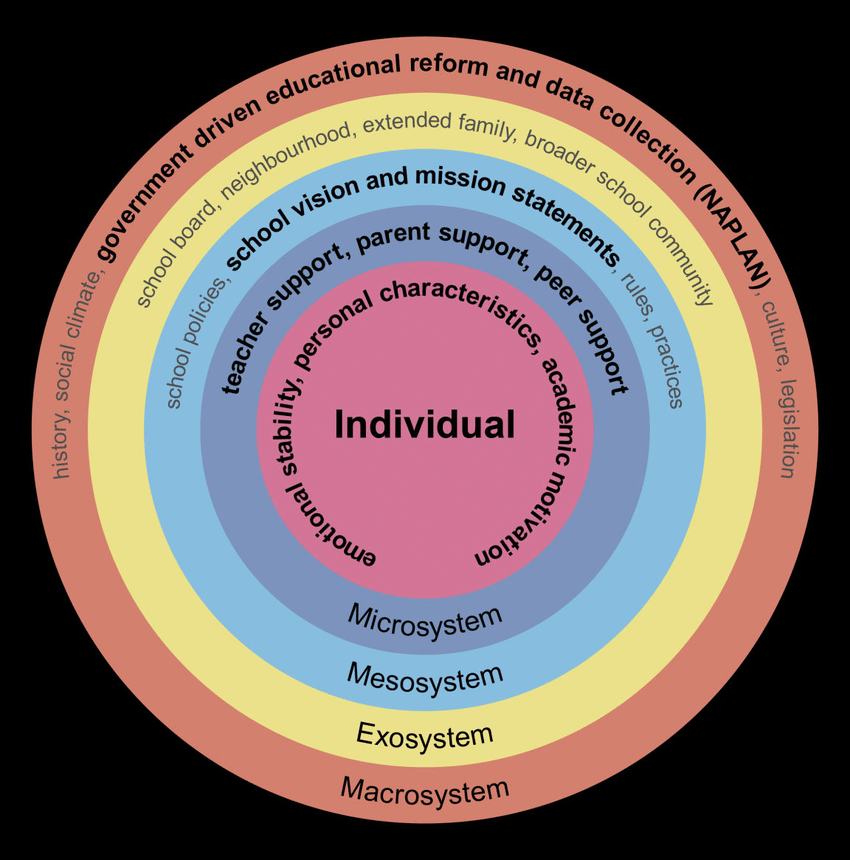
The Psycho-Socio-Ecological Model of Belonging – Kelly Ann Allen And Margaret L. Kern
If you only read one educational researcher on belonging, make it Kelly-Ann Allen.
2. Dr Lisa Cherry OBE
When conversations about belonging intersect with trauma informed practice, Dr Lisa Cherry’s work becomes essential.
Her writing consistently reminds us that belonging is not something we simply offer. It is something that many children and young people have experienced as fragile, inconsistent or absent throughout their lives.
In Weaving a Web of Belonging, Cherry explores how schools can create environments where children feel seen, valued and connected. Her work challenges educators to think carefully about relationships, trust and safety.
What I particularly appreciate about her writing is that it never loses sight of the lived experiences of children and young people. It helps us understand belonging not as a policy objective but as a human experience.
For anyone working with vulnerable learners, this is required reading.
3. Kathryn Riley
Belonging is often discussed through the lens of individual relationships. Kathryn Riley encourages us to think more broadly.
Her book Place, Belonging and School Leadership explores how leaders shape cultures where belonging can flourish. She examines the relationship between people, place and community, helping us understand how schools become environments where individuals feel connected and valued.
Riley’s work is particularly important for school leaders because it moves the conversation beyond classroom practice and into organisational culture.
If belonging is to become part of a school’s identity rather than a short term initiative, leaders need to engage with this work.
4. Ilene Winokur
One of the challenges with educational research is translating theory into practice.
This is where Ilene Winokur’s work is particularly valuable.
Her book Finding Your Pathway to Belonging in Education provides practical strategies and resources that teachers can use directly with children and young people.
The strength of the book lies in its accessibility. It offers tangible approaches that help educators build belonging within their classroom communities while remaining grounded in the wider evidence base.
For busy teachers looking for practical ideas they can implement tomorrow, this is an excellent place to start.
5. Brené Brown
At first glance, Brené Brown may seem an unusual inclusion on a list focused on education.
Yet her work has profoundly influenced how many of us think about belonging.
In Braving the Wilderness, Brown explores a powerful idea. Belonging is not always something we find externally. Sometimes it begins with accepting ourselves.
This perspective is particularly important when working with children and young people. While schools play a significant role in creating conditions for belonging, we also want learners to develop a strong sense of self, confidence in who they are and the courage to be authentic.
Brown’s work reminds us that belonging is not simply about fitting in. It is about being accepted while remaining true to ourselves.
That is a lesson worth teaching.
A Bonus Recommendation
I know this is supposed to be a top five list, but I cannot finish without mentioning Jon Hutchinson.
His forthcoming book on belonging is one I am eagerly anticipating and I suspect it will become a key text for educators.
In the meantime, I would strongly recommend subscribing to his Substack. Jon has a remarkable ability to take complex research and make it understandable, practical and relevant to everyday school life.
At a time when education can sometimes overcomplicate good practice, that skill is incredibly valuable.
Final Thoughts
The field of school belonging is growing rapidly and there are now more resources available than ever before.
Owen Eastwood’s Belonging remains a valuable starting point for understanding the fundamental human need to connect. However, if your focus is specifically on education, I would encourage you to begin with Kelly-Ann Allen and then explore the work of Lisa Cherry, Kathryn Riley, Ilene Winokur and Brené Brown.
Together, these authors offer a rich and varied perspective on what belonging means and how schools can create environments where every child feels that they matter.
And if belonging really is one of the foundations of learning, wellbeing and human flourishing, this feels like reading worth making time for.


